
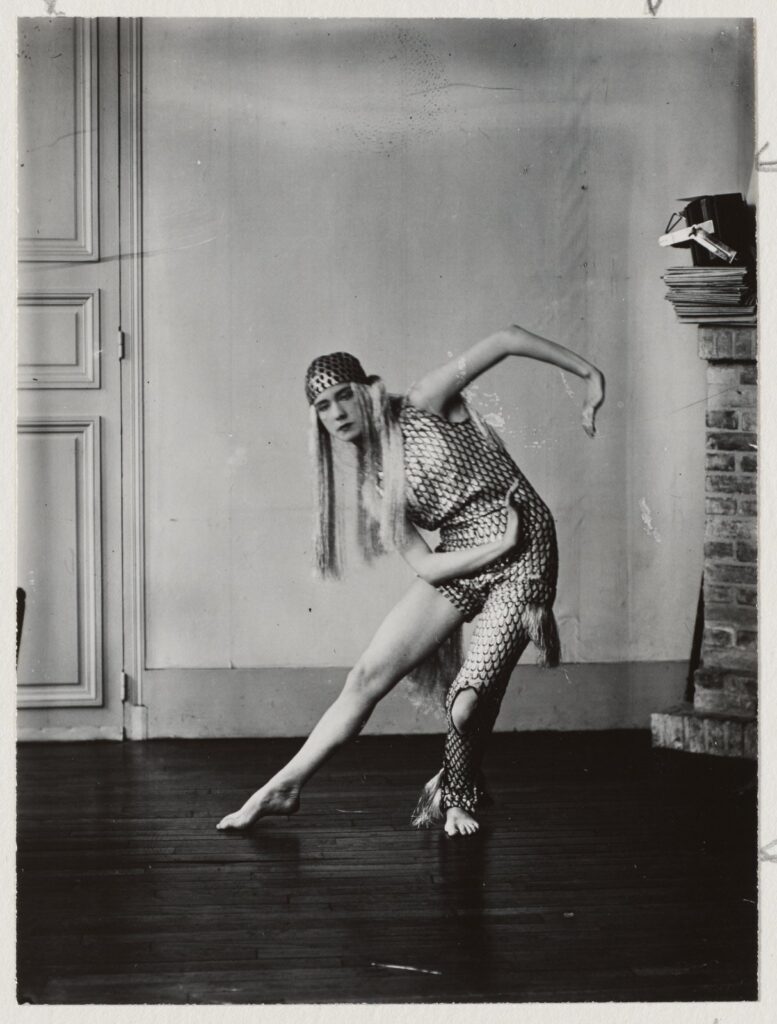
Burnt Offerings : The papers of Lucia Joyce and Shloss vs. Sweeney and The Estate of James Joyce
This link leads to a brief biography of Lucia Joyce – The Other Joyce by Ailin Quinlan https://www.independent.ie/lifestyle/the-other-joyce-29346437.html
Carol Loeb Shloss, former Northwestern University Visiting Professor in Irish literature and former editorial board member of James Joyce Annual, has enjoyed a distinguished career as an academic of the works of James Joyce .[1] Shloss began to research as an independent subject Lucia Joyce, the daughter of James Joyce, in 1988 when consulting Lucia Joyce’s dance archives at Bibliotheque de L’Opera in Paris.[2]
In June of 1988 Stephen James Joyce, grandson of James Joyce, announced at a Joyce symposium held in Venice that he had destroyed letters that he held that were penned by his aunt Lucia Joyce.[3] From those in the crowd, including relatives of literary giants W.B Yeats and Ezra Pound, there was uproar. Further, he said that he had destroyed letters between Lucia and Samuel Beckett, once secretary to James Joyce and lover of Lucia Joyce.[4] When questioned about how such an act could have serious consequences for scholarship of James Joyce, Stephen Joyce replied ” My aunt may have been many things, but to my knowledge she was never a writer.”[5] This kind of capricious, vulgar and entitled behaviour would come to epitomise Stephen Joyce’s stewardship of the Joyce estate. This particularly became the case when he became the last living heir in 1992 and the ‘reviving’ of literary copyright laws in the EU in 1996 and the U.S. in 1998.[6]
Stephen Joyce first became aware that Shloss planned to write a biography of Lucia Joyce, ultimately titled Lucia Joyce : To Dance in the Wake in 1994. This began a decade long acrimonious dispute over the control and publication of documents written by or about Lucia Joyce. It was a dispute about what could be known and learnt about this woman, the artist’s daughter, who was long kept obscure by the Joyce family.[7]
The written materials of and relating to Lucia Joyce have since the day of James Joyce’s death been a serious concern to the Joyce Estate. Private correspondence, medical records and writings ; suppression and destruction has been the estates modus operandi towards these materials. In the immediate period after James Joyce’s death in 1941, friends from his literary circle began to destroy Lucia’s letters. [8] During Stephen Joyce’s tenure as principal executor, he had been tenacious in the suppression of materials related to Lucia Joyce.
Brenda Maddox published her biography of Nora Barnacle, wife of James Joyce, Nora: The Real Life of Molly Bloom in 1988. The original text had an epilogue about Lucia Joyce titled “Her Mother’s Daughter.” Incensed by this, Stephen Joyce said that this was what led him to destroy the letters he had of Lucia Joyce.[9] Stephen Joyce deployed the tactic of having the epilogue removed by threatening to withhold previously granted copyright permissions to quotes and materials of James Joyce from the book.[10], [11] He was successful in having the epilogue expunged.
In 1991, the family of Paul Lèon, a former secretary of James Joyce, donated his Joyce papers to the National Library of Ireland.[12] Before their first public display 1992, Stephen Joyce was given access to these papers and removed materials related to Lucia Joyce.[13]
This brings to the fore a key question : did Stephen Joyce have ownership of the copyright of the papers of Lucia Joyce? Though Stephen Joyce laid claim to Lucia Joyce’s copyright, it was a tenuous claim at best and entirely from his own sense of entitlement.[14] In her will, Lucia Joyce created a trust with the trustees ( all non-family members) retaining all of her property rights, including copyright.[15] Giorgio Joyce ( her brother and father of Stephen Joyce) and Nelly Joyce (a relative) were the financial beneficiaries of this trust, but not trustees. Stephen Joyce and the Joyce Estate could only argue the right over copyright by virtue of the Joyce name. Nothing legally bound Lucia Joyce’s materials to the Joyce Estate. Stephen Joyce used his control over the work of James Joyce ( inclusive of all materials produced by him ) and the threat of removing permissions as a means to have Maddox’s epilogue removed as he had no control over Lucia Joyce’s materials. This is the exact same tactic that he would later employ against Carol Shloss.
Shloss’ first communication with Stephen Joyce about the Lucia Joyce biography was in 1996. He stated he would give no aid to the biography and prohibited the use of any of Lucia Joyce’s papers, which Shloss informed him that he was not legally entitled to do so.[16] Scattered across many archives, he did not own them; physically or legally. In the proceeding years in his letters to Carol Shloss, Stephen Joyce made incredible claims of ownership of materials relating to Lucia Joyce.[17] Not only personal correspondence and medical records, which if he had control over Lucia Joyce’s materials he could make some claim, but also of the letters of the trustees of Lucia Joyce’s trust.[18] This in part may have been to insinuate ownership of Lucia Joyce’s trust, that in some way it had been subsumed into the Joyce Estate.
While Shloss, as she has always claimed, worked within the principal of ‘fair use’, the Joyce Estate’s sensitivity to the subject matter of Lucia Joyce and the materials related to her left Shloss and her publishers vulnerable to what can only be described as vindictive litigation. They could not sue Shloss over the Lucia Joyce materials but her extensive use of James Joyce’s work, which was entirely necessary to the biography and its central thesis ,and the interpretative quality of ‘fair use’ could leave the possibility of costly court actions.
The legal definition of ‘fair use’, covered in the U.S. under section 107 of the U.S Copyright act, for academic purposes is difficult to define. The document James Joyce : Copyright, Fair Use and Permissions : Frequently Asked Questions, produced after Shloss’ legal complaint and in response to years of frustration from Joycean scholars states
“Increasingly, the pivotal consideration under U.S. fair use is whether the purpose and character of the use are “transformative,” or instead merely “superseding,” of the copyrighted work. A transformative use is one that “adds something new, with a further purpose or different character, altering the first with new expression, meaning, or message . . . .” Campbell v. Acuff-Rose Music, Inc., 510 U.S. 569, 579 (1994). In the scholarly context, a transformative use would typically be one that subjects a reasonable amount of discontinuously quoted material to critical commentary and analysis, in contrast to a full page or several pages of uninterrupted quoted material that is not treated to substantial analysis or critical commentary by the quoting scholar.”[19]
Though Stephen Joyce and his legal team continually claimed ownership over Lucia Joyce’s materials, the significant cuts that Shloss was forced to make to the biography ultimately occurred over concern of copyright infringement of James Joyce’s work, which in turn affected the overall scholarly integrity of the book. When published in 2003, many reviewers observed a lack of supporting documentary evidence for many of her arguments.[20]
The Joyce Estate’s tactics against Shloss, as it was previously with other academics, was to continually threaten legal action but without taking any specific recourse, to claim ownership of materials but without any attestation. The continuous and harassing nature of this frugal method of intimidation, with letters penned mostly by Stephen Joyce himself, was the Joyce Estate’s downfall. Stephen Joyce did not understand the limits of his ownership of copyright – he saw it as private and total and to be done with as he pleased. It was in fact Stephen Joyce who had abused copyright. And as detailed in Shloss vs. Sweeney and The Estate of James Joyce,he had done it on numerous occasions and in the most grievous manner.[21]
In 2005, Shloss created a website described as an electronic supplement to Lucia Joyce : To Dance in the Wake (lucia-the-authors-cut.info).[22] In the filed complaint is described as a
“Resource by which scholars, researchers and the general public will be able to view additional supporting materials for Lucia Joyce : To Dance in the Wake, including material that was cut from the book as a result of the Estate’s threats, materials that Shloss herself choose to remove for fear of attracting the negative attention of the estate, and other additional materials related to Shloss’ scholarly analyses.” [23]
The website, when made live, would have been accessible only by U.S. IP addresses, keeping the issue of copyright within one jurisdiction. The website allowed Shloss to make public her research and to circumvent her publishers demands for removal of James Joyce’s materials at minimal cost, as her materials had already been coalesced. More specifically, when informed of the website and with the release of materials seemingly imminent, it forced the Joyce Estate to make direct assertions in contradiction of Shloss’ right to ‘fair use.’ In October 2006 , Shloss and her legal team brought forward four causes of action against the Joyce Estate .[24] Those being :
- 1976 Copyright Act and 1909 Copyright Act
- Fair Use
- Copyright Misuses
- Unclean hands
Within the four actions are 36 specific complaints. Shloss and her legal teams key arguments can be surmised in complaint number 19 and 21
– Shloss alleges, upon information and belief, that the defendants are using threats of copyright infringement to unlawfully secure an exclusive right or limited monopoly not granted by the copyright laws.
– Defendants engaged in the misuse of their copyrights, including the letters they sent to Shloss and to her publisher and university employer, by claiming that Shloss’ work constituted copyright infringement when defendants knew or should know that it did not. [25]
Shloss’ legal team was composed of the Fair Use Project of the Stanford Law Center for Internet and Society.[26] Notable in the team were Larry Lessig and Robert Spoo. At the time of the case, Lessig was Professor of Law at Stanford Law School and founder of the school’s Center for Internet and Society.[27] He is also the co-founder of Creative Commons and author of Free Culture: How Big Media Uses Technology and the Law to Lock Down Culture and Control Creativity, itself published under creative commons.[28] Robert Spoo was formerly a faculty member in the English Department at The University of Tulsa, where he was also Editor of the James Joyce Quarterly before becoming an attorney specialising in copyright and intellectual property.[29], [30]
Owing to trial law in California, the place of the court actions, the litigants were instructed first to go into mediation. The result of this mediation was a win for Shloss and her legal team, as was declared by the trail judge, and a declaration of her rights within ‘fair use’ for both the supplementary website and for future print editions of Lucia Joyce : To Dance in the Wake to include the supplementary materials.[31] Court costs of $240,00 were awarded to Shloss and her legal team.
Photo Credit : Berenice Abbott, Portrait of Lucia Joyce , 1926–1927, printed 1982, Gelatin silver print. Gift of A&M Penn Photography Foundation by Arthur Stephen Penn and Paul Katz, 2007. The Clark Art Institute, 2007.2.400.
References
[1] Carol Loed Shloss, vs. Sean Sweeney, in his capacity as trustee of the Estate of James Joyce, and the Estate of James Joyce, Case No. CV 06-3718 98 (JW) (HRL) U.S. District Court, Northern District of California San Jose Division. October 26, 2006. pg 2
[2] Carol Loed Shloss, vs. Sean Sweeney, in his capacity as trustee of the Estate of James Joyce, and the Estate of James Joyce, Case No. CV 06-3718 98 (JW) (HRL) U.S. District Court, Northern District of California San Jose Division. October 26, 2006 pg 6
[3]Caryn, James, New York Times News. n.d. “PRIVACY A BURNING ISSUE FOR JOYCE`S GRANDSON.” Chicagotribune.Com. Accessed December 8, 2020
[4] Caryn, James, New York Times News. n.d. “PRIVACY A BURNING ISSUE FOR JOYCE`S GRANDSON.” Chicagotribune.Com. Accessed December 8, 2020
[5] Caryn, James, New York Times News. n.d. “PRIVACY A BURNING ISSUE FOR JOYCE`S GRANDSON.” Chicagotribune.Com. Accessed December 8, 2020.
[6] Paul K. Saint-Amour, Michael Groden, Carol Loeb Shloss, and Robert Spoo. 2008. “James Joyce: Copyright, Fair Use, and Permissions: Frequently Asked Questions.” James Joyce Quarterly 44 pg. 757
[7] This essay focuses solely on the history of and dichotomy between the suppression of the papers of Lucia Joyce and public research and publication of the papers. While the life of Lucia Joyce is worthy of scholarship, the complicated narrative of her life falls outside the purview of this essay.
[8] McKenna. 2012. “In the Wake of Fair Use: Incest, Citation, and the Legal Legacy of Finnegans Wake.” Journal of Modern Literature 35 pg 58,
[9]James, Caryn. 1988. “The Fate of Joyce Family Letters Causes Angry Literary Debate (Published 1988).” The New York Times, August 15, 1988, sec. Books. https://www.nytimes.com/
[10] Caryn ,James, New York Times News. n.d. “PRIVACY A BURNING ISSUE FOR JOYCE`S GRANDSON.” Chicagotribune.Com. Accessed December 7, 2020.
[11] “The War of Words over Joyce’s Literary Legacy.” n.d. The Irish Times. Accessed December 11, 2020. https://www.irishtimes.com/culture/the-war-of-words-over-joyce-s-literary-legacy-1.280570.
[12] “A Portrait Of the Artist’s Troubled Daughter – The New York Times.” n.d. Accessed December 10, 2020.
[13] “A Portrait Of the Artist’s Troubled Daughter – The New York Times.” n.d. Accessed December 10, 2020.
[14] Carol Loed Shloss, vs. Sean Sweeney, in his capacity as trustee of the Estate of James Joyce, and the Estate of James Joyce, Case No. CV 06-3718 98 (JW) (HRL) U.S. District Court, Northern District of California San Jose Division. October 26, 2006 pg 9
[15] Carol Loed Shloss, vs. Sean Sweeney, in his capacity as trustee of the Estate of James Joyce, and the Estate of James Joyce, Case No. CV 06-3718 98 (JW) (HRL) U.S. District Court, Northern District of California San Jose Division. October 26, 2006 pg 9 – 10
[16] Carol Loed Shloss, vs. Sean Sweeney, in his capacity as trustee of the Estate of James Joyce, and the Estate of James Joyce, Case No. CV 06-3718 98 (JW) (HRL) U.S. District Court, Northern District of California San Jose Division. October 26, 2006 pg 9
[17] Carol Loed Shloss, vs. Sean Sweeney, in his capacity as trustee of the Estate of James Joyce, and the Estate of James Joyce, Case No. CV 06-3718 98 (JW) (HRL) U.S. District Court, Northern District of California San Jose Division. October 26, 2006 pg 9
[18] Carol Loed Shloss, vs. Sean Sweeney, in his capacity as trustee of the Estate of James Joyce, and the Estate of James Joyce, Case No. CV 06-3718 98 (JW) (HRL) U.S. District Court, Northern District of California San Jose Division. October 26, 2006 pg 10
[19] Paul K. Saint-Amour, Michael Groden, Carol Loeb Shloss, and Robert Spoo. 2008. “James Joyce: Copyright, Fair Use, and Permissions: Frequently Asked Questions.” James Joyce Quarterly 44 pg 761
[20] Haven, Cynthia. 2009. “Stanford Researcher Gets Six-Figure Settlement from James Joyce Estate.” Stanford University. September 28, 2009. http://news.stanford.edu/news/2009/september28/shloss-joyce-settlement-092809.html.
[21] While Sèan Sweeney, a trustee, is named in the complaint, the settlement agreement describes the parties as “The Estate of James Joyce ( the “Estate”) and Stephen James Joyce (“Joyce”) and, on the other hand, Carol Shloss (“Shloss”). http://cyberlaw.stanford.edu/publications/shloss-v-estate-joyce-settlement-agreement
[22] “Fair Use Project and Cyberlaw Clinic at Stanford Law School Represent Scholar in Lawsuit Against the Estate of James Joyce; Landmark Case Tackles Copyright Use, Pleading States Joyce Estate Impedes Academic Progress – ProQuest.” n.d. Accessed November 29, 2020.
[23] Carol Loed Shloss, vs. Sean Sweeney, in his capacity as trustee of the Estate of James Joyce, and the Estate of James Joyce, Case No. CV 06-3718 98 (JW) (HRL) U.S. District Court, Northern District of California San Jose Division. October 26, 2006 pg 12
[24] Carol Loed Shloss, vs. Sean Sweeney, in his capacity as trustee of the Estate of James Joyce, and the Estate of James Joyce, Case No. CV 06-3718 98 (JW) (HRL) U.S. District Court, Northern District of California San Jose Division. October 26, 2006 pg 19 – 23
[25] Carol Loed Shloss, vs. Sean Sweeney, in his capacity as trustee of the Estate of James Joyce, and the Estate of James Joyce, Case No. CV 06-3718 98 (JW) (HRL) U.S. District Court, Northern District of California San Jose Division. October 26, 2006 pg 21
[26] http://cyberlaw.stanford.edu/
[27] “Fair Use Project and Cyberlaw Clinic at Stanford Law School Represent Scholar in Lawsuit Against the Estate of James Joyce; Landmark Case Tackles Copyright Use, Pleading States Joyce Estate Impedes Academic Progress – businesswire.com.” n.d. Accessed November 29, 2020. http://search.proquest.com/docview/445213165?accountid=14504
[28]http://www.free-culture.cc/about/
[29] “Robert Spoo.” n.d. Faculty & Adjuncts. Accessed December 10, 2020. https://faculty.utulsa.edu/faculty/robert-spoo/.
[30] “UCD on Joyce – The End of Copyright: Discovering Who Joyce Really Is – Robert Spoo.” n.d. Accessed December 10, 2020. https://www.ucd.ie/ucdonjoyce/writings-on-joyce/articles/the-end-of-copyright-discovering-who-joyce-really-is-robert-spoo/index.html.
[31] Shloss, Carol Loeb. n.d. “Copyright and the Joyce Estate: Legal Issues, Moral Issues, and Unresolved Issues in the Publication of Lucia Joyce: To Dance in the Wake,” James Joyce Annual, Volume 2008, pg 30